
A Proactive Guide to Extending Heating Element Life
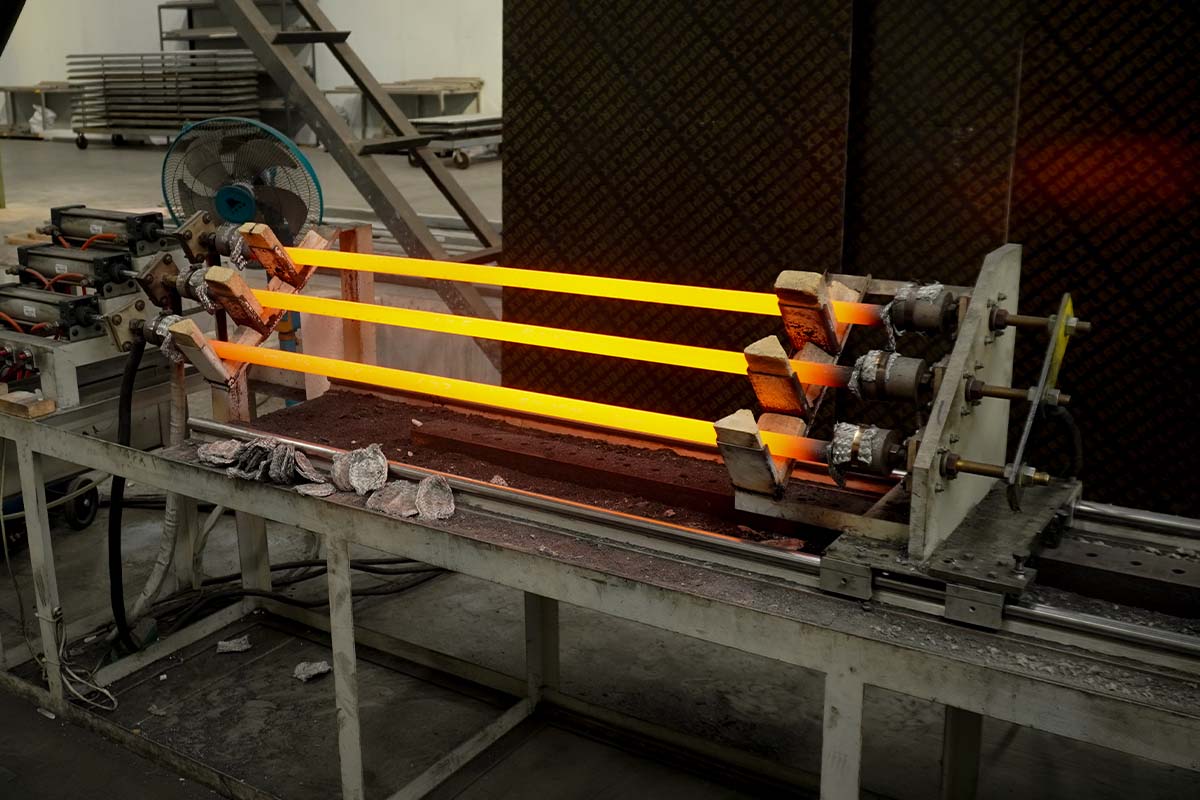
The reliability of industrial heating elements directly impacts production continuity and energy efficiency.
In applications ranging from hot air systems to furnace smelting, performance degradation or unexpected failure can lead to decreased energy efficiency, unplanned downtime, and significant production losses. Establishing a proactive maintenance systemis key to managing these risks and extending equipment service life.
This guide outlines essential maintenance practices to ensure stable, efficient, and safe operations, optimizing your total cost of ownership.
Ⅰ、The Critical Role of Proper Maintenance
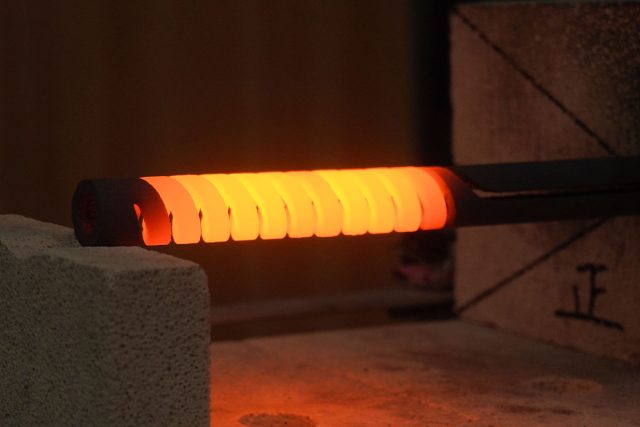
The degradation of heating elements is often gradual. Dust, process contaminants, and mineral deposits accumulate, impairing heat dissipation and leading to hot spots, reduced efficiency, and premature failure. More critically, such buildup can mask underlying hazards like material aging, surface cracks, or insulation breakdown, potentially leading to electrical faults.
A proactive regimen based on regular inspection, cleaning, and performance monitoring is therefore critical. It enables early issue identification, extends component life, and ensures operational safety.
Ⅱ、Common Issues & Failure Modes by Heating Element Type
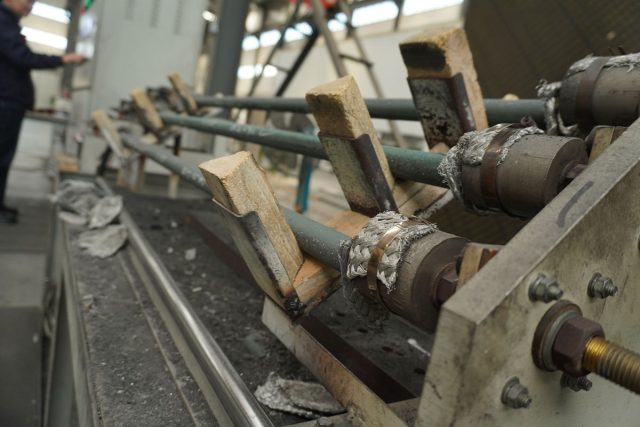
- Molybdenum Disilicide (MoSi₂) Heating Elements
- High-Temperature Oxidation and Aging: While a protective silica (SiO₂) layer forms at high temperatures (>1500°C), rapid thermal cycling or thermal shock can cause this layer to crack or spall, accelerating oxidation of the base material and increasing resistivity.
- Low-Temperature Pesting Oxidation: MoSi₂ is vulnerable in the 500–800°C range, where “pesting” oxidation can cause powdery degradation, severely compromising mechanical strength.
- High Mechanical Brittleness: More brittle than SiC at high temperatures, MoSi₂ elements are susceptible to cracking or breaking if subjected to vibration or improper support during installation or operation.
- Connection Point Failures: Poor connection design or installation can create stress concentrations at cold ends due to thermal expansion mismatch, leading to loosening or fracture.
- Silicon Carbide (SiC) Heating Elements
- Gradual Resistance Increase: During prolonged high-temperature operation, the oxidation and volatilization of silicon content can reduce the effective conductive cross-section, causing resistance to rise and affecting power stability.
- High-Temperature Strength Loss: Long-term exposure above 1400°C can lead to recrystallization and grain growth, resulting in a weaker, more porous structure prone to fracture.
- Sensitive to Atmospheres:
- Oxidizing Atmospheres:In oxygen-rich or high oxygen partial pressure environments, the SiC surface oxidizes to form a protective SiO₂ layer. However, this layer may spall off under severe temperature fluctuations.
- Reducing Atmospheres:In atmospheres such as CO or H₂, the SiO₂ protective layer can be reduced and destroyed, accelerating the oxidation of the element.
- Corrosive Atmospheres:These can react with the SiO₂ layer or the SiC substrate itself, leading to surface erosion and performance degradation.
- Joint Overheating Failures: Poor contact or resistance increase at the connection points between the SiC element and metal leads can cause localized overheating and failure.
For effective maintenance, establish key monitoring indicators, such as resistance trends and surface condition, and a preventive replacement plan based on your specific operating conditions (temperature profile, atmosphere, cycling).
Common Failure Modes: MoSi₂ vs. SiC
| Aspect | Molybdenum Disilicide (MoSi₂) | Silicon Carbide (SiC) |
| High-Temp Oxidation | Forms a protective SiO₂ layer above 1500°C. Thermal cycling can cause spalling, leading to accelerated oxidation and increased resistivity. | Surface oxidizes to form SiO₂. Layer stability can be compromised by thermal shock or specific atmospheres. |
| Low-Temp Vulnerability | Prone to “pesting” (accelerated oxidation and powdering) in the 500–800°C range, severely weakening mechanical strength. | Less susceptible to low-temperature corrosion. |
| Mechanical Properties | More brittle at high temperatures; vulnerable to cracking from vibration or improper support. | Generally higher mechanical strength, but can undergo grain growth and weakening above 1400°C. |
| Resistance Change | Resistance tends to increase steadily with oxidation and aging. | Resistance gradually increases due to silicon oxidation and volatilization, reducing effective conductive cross-section. |
| Atmosphere Sensitivity | Primarily sensitive to oxidation cycles and low-temperature pesting. | Sensitive to various atmospheres: • Reducing (H₂, CO): Can reduce protective SiO₂ layer. • Corrosive: Can attack SiO₂ layer or SiC base. |
| Connection Points | Joints are critical failure points due to thermal expansion mismatch and stress. | Metal-to-SiC junctions are prone to overheating if contact resistance increases. |
Ⅲ、Key Maintenance Practices for Extending Heating Element Life

- Regular Cleaning
After shutdown and cooling, gently remove surface deposits with a soft brush or low-pressure air. Avoid mechanical abrasion. Use specialized cleaners suitable for the element material and ensure clear surrounding airflow to prevent localized overheating.
- Preventive Monitoring
Periodically measure cold resistance; a >10% increase warrants attention. Visually inspect surface conditions: look for uniform oxide layers and powdering on MoSi₂, and check for coating integrity, erosion, or cracks on SiC. Pay close attention to stress concentration points like connections and supports.
- Operational Control
Adhere strictly to recommended heating and cooling rates to avoid thermal shock. During installation, allow for thermal expansion and ensure even support. Avoid prolonged operation in sensitive temperature zones (e.g., 500–800°C for MoSi₂).
- Environmental Management:
Implement protective measures or use specially coated elements in corrosive atmospheres. Regularly calibrate furnace temperature uniformity to prevent localized overheating .
- Lifecycle Management
Maintain an element log to track usage hours, resistance changes, and maintenance history. Set replacement thresholds based on data to enable predictive maintenance .
Core Principle: Regular inspection, data tracking, and a proactive, preventive approach are fundamental to enhancing energy efficiency, minimizing downtime, and maximizing service life.
Ⅳ、Conclusion
Regular, standardized maintenance is fundamental to ensuring the efficient operation of heating systems and controlling overall costs. Through systematic cleaning, preventive checks, and scientific operational practices, you can significantly extend element life and maintain stable performance.
For ensuring the long-term reliability of critical elements like MoSi₂ and SiC, it is advised to use specialized tools and matched replacement parts. Our high-performance industrial heating solutions are engineered for demanding environments and extended service life, offering exceptional temperature resistance and structural reliability.
If you require assistance optimizing your system’s performance or professional maintenance support, please feel free to contact us.
Ⅴ、Heating Element Maintenance FAQ
- What are common signs of heating element failure?
Common signs include visible cracking, blistering, or distortion on the element’s surface; noticeably slower heating; unusual noises during operation; or frequent tripping of circuit breakers .
- How often should heating elements be cleaned?
A systematic cleaning 1-2 times per year is recommended. For appliances prone to scaling, like water heaters, an annual flush is advised to remove mineral deposits .
- What basic tools are needed for maintenance?
Essential tools include a soft-bristle brush, microfiber cloths, non-abrasive sponges, a multimeter (for electrical checks), and insulated wire cutters. Specialist descalers may also be used .
- When should a heating element be replaced?
Replace the element if you observe significant cracks, blisters, deformation, or if performance issues, unusual noises, or electrical faults persist .
- What factors cause premature aging?
Key factors are dust/mineral buildup, frequent overheating, power supply voltage fluctuations, and the use of non-standard or inferior replacement parts .
- How can I prevent damage effectively?
Adhere to a regular cleaning schedule, inspect electrical connections, avoid overloading the system, and strictly follow the manufacturer’s operational and maintenance guidelines .
- Does regular maintenance help reduce energy costs?
Yes. Keeping elements clean and in good working order improves thermal efficiency, reducing electricity consumption and long-term operational costs .
- Why are regular inspections necessary?
Inspections help identify visible damage, electrical hazards, or performance degradation early, allowing for corrective action before major issues arise, thus ensuring continued safe and efficient operation